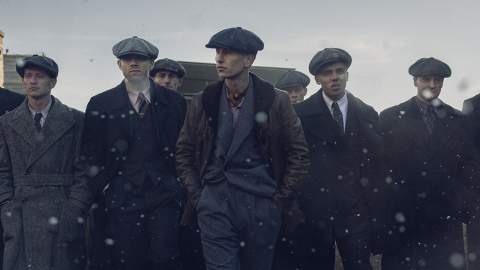

The Peaky Blinders were real. The flat caps were real. The gambling dens, the swagger- all of it, completely real. And Birmingham has the history to prove it.

Small Heath. Digbeth. The canals. The forges and back-to-backs. Long before Steven Knight put pen to paper, these streets shaped one of history's most notorious urban gangs, and they're waiting for you to explore them.

This guide takes you through Birmingham's gritty, fascinating past - the story of how a city gave birth to Britain's most iconic gang. Flat caps on. Let's go.

1. Small Heath & The Jewellery Quarter: The Streets That Made Them

The Peaky Blinders didn't begin in a writers' room. They began in the narrow lanes of Small Heath, then one of the most densely packed working-class neighbourhoods in Britain.

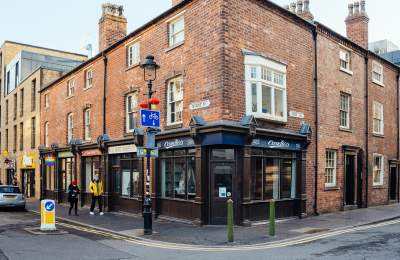
The real gang operated here from the late 1880s, running gambling dens, intimidating bookmakers and carving out territory through a lot of swagger, and the kind of persuasion that didn't really take no for an answer. Their name is believed to have originated at the Rainbow Pub in Digbeth, and their stomping ground extended through the streets surrounding Garrison Lane - where a pub of that name still stands today, a piece of living history.

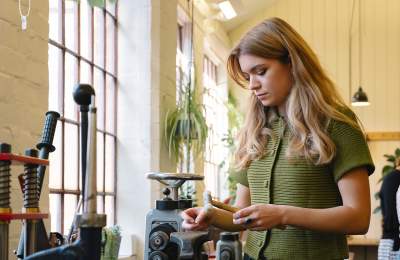
A short distance away, the Jewellery Quarter is one of Europe's greatest concentrations of independent jewellers and craftspeople and tells the other side of Birmingham's story. This was a neighbourhood where skilled artisans turned raw metal into something beautiful.

Wander the Quarter's Victorian streets, peer into workshops, and visit the Museum of the Jewellery Quarter – they were two very different worlds, remarkably close together.

Don't miss: The Museum of the Jewellery Quarter. Garrison Lane (exterior). The Old Crown pub in Digbeth which is Birmingham's oldest pub, dating to 1368, complete with a rumoured secret tunnel once used by the gang.

Visitor tip: Look out for guided Slogging Gangs walking tours that trace the real gang routes through Small Heath and Digbeth, with pub stops along the way.

📍 Jewellery Quarter: St Paul's Square, B3 | Small Heath: Garrison Lane, B9

2. Black Country Living Museum: Step onto the Real Set

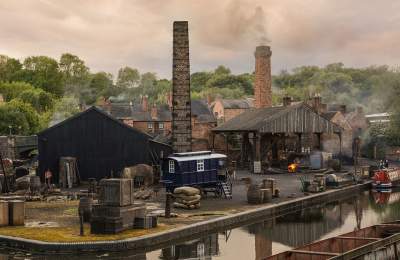
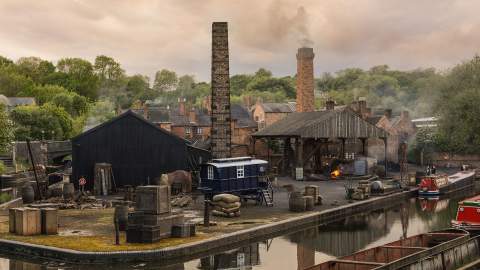
If you've ever watched a scene set in Charlie Strong's scrap yard and thought it looked incredibly authentic - that's because it was. The Black Country Living Museum in Dudley, just 12 miles from Birmingham city centre, was used as a key filming location across every series of Peaky Blinders.

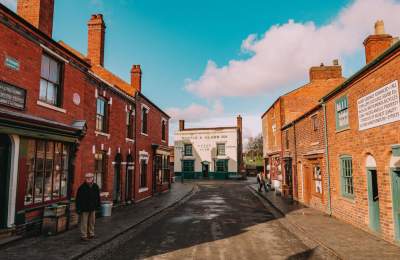
Spread across 26 acres of cobbled streets, smoky backyards, working canal docks and period shopfronts, the museum doesn't just show you what 1920s Birmingham looked like, it puts you inside it. Costumed actors play residents. Trams rattle past. Smoke rises from the chain-making shop.

"The Black Country Living Museum is the home of Peaky Blinders." - Steven Knight, Creator of Peaky Blinders

This is where parts of the Shelby family's world were built on screen. But more than a film set, The Black Country Living Museum tells over 200 years of West Midlands working-class history, the same history that produced the real Peaky Blinders.

Don't miss: The Canal Dock, where key canalside scenes were filmed. The Chain Making Shop. The Rolling Mill. And the pub, naturally.

Visitor tip: Check the museum's events calendar for seasonal late-night openings and special Peaky Blinders themed evenings. Book in advance- they sell out fast! By order.

📍 Tipton Road, Dudley, DY1 4SQ

3. The Birmingham Canals: More Miles of Canal Than Venice

Birmingham has more miles of canal than Venice, a fact that surprises almost everyone who hears it for the first time. But these weren't built for romance. They were the motorways of an industrial empire, carrying coal, iron, and goods to and from the factories that powered Victorian Britain.

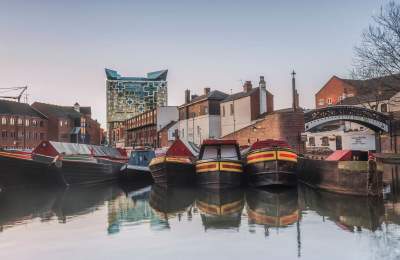
In the world of the Peaky Blinders, the canals are misty, atmospheric, and slightly ominous. A place to make deals, hide contraband, and disappear. The show captures them brilliantly and the reality isn't far off. The network running through Gas Street Basin, Digbeth and out into the Black Country was once the route by which Birmingham's criminal underworld moved as freely as any bargeman.

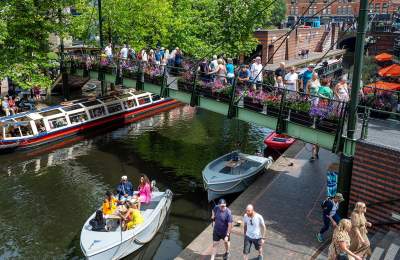
Today, the towpaths offer one of the most atmospheric walks in any UK city. Gas Street Basin & Brindleyplace are buzzing hubs of canal boats, independent restaurants and bars. Walk east towards Digbeth and the mood shifts - older, quieter, grittier. More Shelby than Shoreditch.

For the full experience, take a narrowboat trip from Gas Street Basin and drift through the same waterways that defined this city's industrial age. As the bridges pass overhead and the city noise fades, it's not hard to imagine why the Peaky Blinders made the canals their own.

Don't miss: Gas Street Basin. The Mailbox Canal Walk. The towpath route from the city centre out towards Digbeth and Bordesley.

Visitor tip: Several operators run guided boat trips from Gas Street Basin. A 45-minute evening cruise at dusk is about as atmospheric as Birmingham gets.

📍 Gas Street Basin, B1 2JR

4. The Industrial Revolution: The World That Made the Gang

Birmingham was not the cosmopolitan city of today - but a furnace. A place where thousands of people worked long hours in dangerous conditions, for wages that barely covered rent.

By the 1880s, Birmingham was the ‘Workshop of the World’. Gun-making in Aston. Jewellery in the Quarter. Metalwork and chain-making across the Black Country. The city produced everything from pen nibs to railway engines and its working-class communities were packed tightly together.

It was in this pressure-cooker environment that gangs like the Peaky Blinders emerged. Not as glamorous criminal masterminds (well not to begin with!), but young men from deprived communities who found power and income where they could. Violence was common. The police were often corrupt or simply outmatched. And the courts struggled to keep up.
 

The show captures this world with remarkable accuracy. The squalor and the swagger. The entrepreneurialism. The loyalty. None of it was invented, it was drawn straight from the historical record of industrial Birmingham.

To see it bought to life, head to Thinktank, Birmingham Science Museum, which tells the story of Birmingham's industrial revolution in vivid, accessible detail. Then walk through Digbeth - one of the oldest parts of the city, where red-brick Victorian factories still line the streets.  The upcoming Peaky Blinders film was shot right here at Digbeth Loc. Studios, bringing the story full circle, back to the city, and the streets, that started it all

Don't miss: Thinktank Science Museum. The historic Custard Factory in Digbeth. The Birmingham back-to-back houses at Hurst Street, preserved by the National Trust.

Visitor tip: The National Trust's Court 15 back-to-back houses at Hurst Street offer guided tours of a preserved Victorian working-class home. Booking essential and absolutely worth it.

📍 Thinktank: Millennium Point, Curzon Street, B4 7XG | Digbeth: off High Street Deritend, B12

Ready to Walk in Their Footsteps?

Birmingham isn't just the backdrop to one of Britain's greatest TV dramas. It's the reason the story exists at all. A city tough enough, complex enough, and ambitious enough to produce something like the Peaky Blinders and proud enough to own that history.

Come and see it for yourself. The streets are still here. The canals are still here. And the city, as ever, has plenty more to say.