

I’m Birmingham born and bred, and I’ve spent some of my working life in music and the creative industries. So when I was asked to write something for Black History Month, I knew straight away it had to be about what Black communities in this region have given us: the music we hear, the stories we watch, and a fair bit of how we talk, dress and think.
My introduction to music came through my parents, especially my dad, who was a music promoter in the 1990s. From an early age, I saw what happened behind the scenes of live music, from the planning and preparation to the excitement of show night. Birmingham Town Hall and Symphony Hall became my favourite music venues, and both still hold a special place in my relationship with the city’s music scene.
It isn’t only a Birmingham story either. Coventry, Wolverhampton, Walsall, Dudley, Sandwell and the wider Black Country have all produced musicians, writers, performers and filmmakers whose work has travelled a long way from home. This region is where migration, industry and resistance met, and a lot of what came out of that belongs to Britain as a whole.
Below are some of the people, places, events and stats I think everyone should know about.
Black culture is British culture
Reggae, jungle, garage, grime, R&B, rap, dance music and spoken word have all changed how Britain sounds and how it sells itself to the world. Plenty of them started in communities that built their own spaces and audiences because the mainstream wasn’t making room.
This year UK Music put a number on it. Its report Black Music Means Business found that Black music generated an estimated £24.5 billion of the UK recorded music market’s £30 billion revenue between 1994 and 2023. That’s 80%. The same report found that the people behind that music still face gaps in pay, contracts, funding and progression, which is worth remembering whenever Black music gets called a success story.
What I loved is that Birmingham gets its own section. The report calls the city one of the UK’s most significant centres for Black music, and traces how Caribbean and African communities, including Birmingham’s large Jamaican population, built its reggae, roots and sound system culture. It picks out Handsworth, the Reggae-Bhangra fusion that came from Black and Punjabi communities living side by side, and the city’s run of grime, rap and drill, right up to the emerging Brum-Troit sound.
The West Midlands and the sound of Black Britain
In Birmingham, African and Caribbean communities shaped reggae, ska, soul, jazz, gospel and sound system culture. Handsworth, Aston and Lozells became places where Caribbean, African, American and British influences met and turned into something of their own.
That’s the ground Steel Pulse, UB40, Musical Youth, Joan Armatrading and Laura Mvula came out of. Go a bit further down the road and the story keeps going. Coventry’s 2 Tone movement brought Jamaican ska, punk and working-class politics together through multiracial bands like The Specials and The Selecter, and with Pauline Black fronting The Selecter, Coventry became a symbol of creative unity at a time of deep political and racial division.
Wolverhampton gave us Beverley Knight, whose voice was formed in church and gospel. Walsall gave us Jorja Smith, who moves between R&B, jazz, reggae, grime and UK garage like it’s nothing. Some of the biggest Black British voices of the last few decades grew up nowhere near the city centre.
A home for Black creativity
A lot of this is kept alive by places, and the Legacy Centre of Excellence in Newtown is one of the most important. As Europe’s largest Black-owned business and arts centre, its theatres, creative spaces, workshops and programmes give artists, young people, entrepreneurs and community groups somewhere to learn, share work and find each other, and it keeps Birmingham’s Black cultural history under the same roof as the next generation.
Remembering DJ Buxley
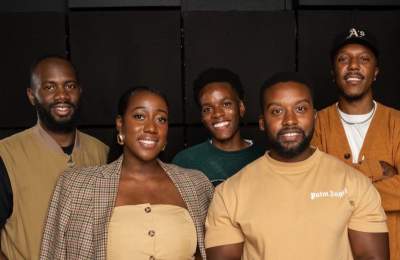
I can’t write about Birmingham’s Black music scene right now without talking about DJ Buxley, the founder of Boxout UK and Boxout Fest. He moved to Birmingham to study at Aston University and started the Boxout parties in Digbeth in 2018. It started with party games and music. It grew into one of the city’s most important grassroots platforms for Black music and culture, from Afrobeats and dancehall to soca, R&B, hip hop and amapiano, with a stage for emerging DJs and artists.
He passed away in September, aged 34, after living with cancer for four years. By 2025 Boxout Fest was drawing more than 6,000 people across two days, though the numbers were never really the point. He built places where young Black audiences felt seen, where new talent could get experience, and where music, charity, networking and wellbeing all sat together. In a city with a global music heritage, he made sure the next generation had a stage of its own.
Benjamin Zephaniah and the voice of Birmingham
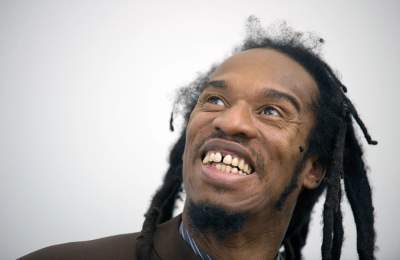
If one person sums up Birmingham’s mix of music, language and activism, for me it’s Benjamin Zephaniah.
Born and raised here, he became one of Britain’s best-known poets and writers. His work was direct, musical and rooted in reggae and dub, and he wrote about racism, identity, injustice, politics, animals and everyday life in words people could actually feel. He took poetry out of books and classrooms and put it on stages and over rhythms, and Birmingham shaped that voice before he carried it round the world. He died in December 2023, aged 65.
On Saturday 10 October, Midlands Arts Centre hosts Benjamin Zephaniah Day: A Festival of Rhythm, Unity and Revolution, co-hosted by his wife Qian Zephaniah. Expect poetry, music, dance and drumming, with local poets Casey Bailey, Zakariye and Vig, and an open mic hosted by Casey for new and developing writers. Free drop-in arts workshops run alongside. It’s very him: established names, new voices and the public all on the same stage, because he believed creativity should be open to everyone.
Event details: Saturday 10 October 2026, 12pm-2.45pm (drop-in workshops until 3pm), Midlands Arts Centre, Cannon Hill Park. Pay What You Choose. Open mic sign-ups from 11.30am.
Beyond Music: Black Stories on Screen
The story of Black British culture isn’t only told through music. It’s also in film and television, and in the way Black British creators have found new ways to tell stories about everyday life, identity and community.
A good example is Supacell, the Netflix series created by South London filmmaker and rapper Rapman. The series follows five ordinary Black Londoners who suddenly develop superpowers, but underneath the sci-fi premise are stories about family, relationships, work, money and the pressures of everyday life. That grounding was important to Rapman, who wanted to tell a superhero story centred on ordinary people and the problems they still face in everyday life.
Whilst Supacell is set in South London, there is a wider connection here to the story of Black British creativity. From reggae and sound systems to grime, rap, poetry and television, Black British creators have often used music and storytelling to reflect their own experiences and create space for stories that might otherwise be overlooked. Supacell is part of that wider cultural landscape: a distinctly British story created by a Black British filmmaker, with Black British characters and experiences at its centre.
The region’s influence can also be heard behind the camera. Sillkey, a composer, producer, songwriter and multi-instrumentalist from Newtown in Birmingham, composed the music for all six episodes of Netflix’s Supacell. His score connects Birmingham’s Black music heritage with a globally successful Black British superhero story, showing how West Midlands talent is helping shape not only who appears on screen, but how major productions sound.
And that matters here, because the West Midlands has its own long history of taking different influences, experiences and voices and turning them into something that travels well beyond the region. From Handsworth’s sound systems and reggae scene to the musicians, writers and filmmakers working across Birmingham and the wider West Midlands today, this is a story that is much bigger than music alone.
What’s on this Black History Month
- Black History Month Exhibition. Colmore Life has partnered with Birmingham City University’s School of Arts to present a special outdoor exhibition celebrating Black History Month 2026, bringing together creativity, culture and community in the heart of Birmingham city centre.
- African Soul Rebels, Coventry. Contemporary African music from Les Amazones d’Afrique, Gasper Nali and N’famady Kouyaté.
- Ballet Black at 25, Coventry. A special anniversary performance at the Belgrade Theatre celebrating 25 years of Ballet Black.
- Blaze FM, Coventry. A production combining theatre with grime, garage, drill and jungle.
- Creative Industry Awards, Birmingham. Celebrating excellence, innovation and inclusion across the region’s creative industries, including creatives on the rise. Saturday 17 October 2026, 5pm until late, Infinite Arts, Birmingham.
- Black Country Society History Day, Dudley. A day on protest and dissent, including the political and racial history of 1960s Smethwick.
- Gary Crosby and Denys Baptiste present A Love Supreme, Staffordshire. Two leading Black British jazz musicians celebrate John Coltrane at the New Vic Theatre.
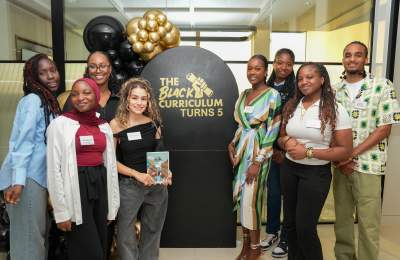
- Alfred Works has partnered with The Black Curriculum to raise funds for the incredible hard work the charity does to help embed Black history into education and spark meaningful conversations about Black history, arts and culture. The food hall has created an exclusive cocktail, the Kromanti Mai Tai, with 50% of profits donated to The Black Curriculum and the other 50% going to Blend Culinary Foundation, which exists to help tackle food insecurity.
Over to you
Celebrating is the easy part. What happens next depends on whether emerging Black artists, filmmakers, musicians, writers and creative professionals across the region can get into the rooms, the funding and the networks they need to build careers that last.
So pick something from the list and go, and take someone with you. Follow an artist you hadn’t heard of before today. Back the venues and the nights making space for new voices, from Birmingham and Coventry to Wolverhampton, Walsall, Dudley, Sandwell and Staffordshire.
I love this region and all it has given me, and I’ll keep celebrating the people whose talent, stories and ambition make the West Midlands such an important part of Black British culture.
Sources and acknowledgements: Information and statistics used in the blog were drawn from UK Music’s 2026 Black Music Means Business report, Black History Month UK’s West Midlands event listings, and official information published by the Legacy Centre of Excellence, Boxout UK, S.O.U.L. Fest, Netflix and the relevant event organisers and venues.